
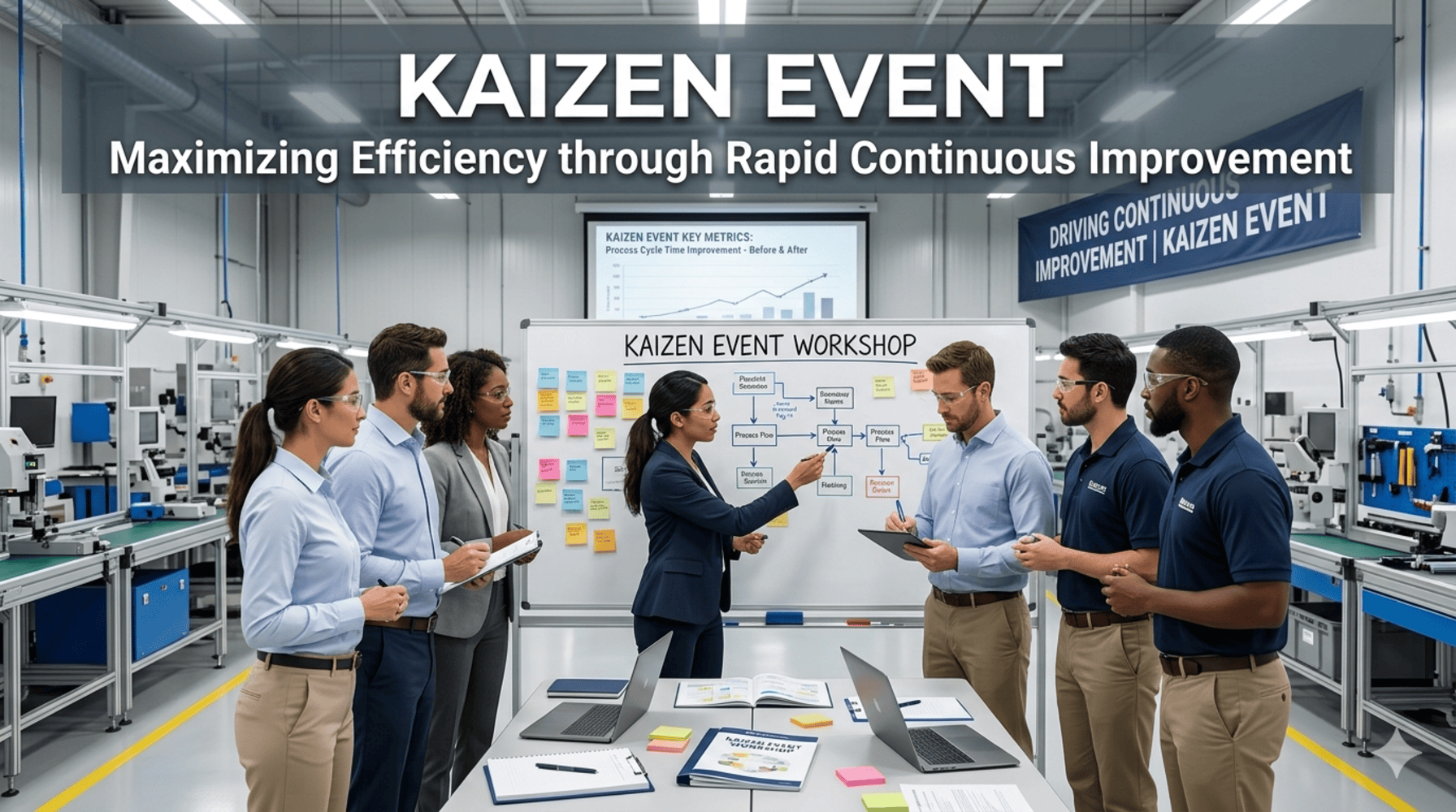
Manufacturers are constantly under pressure to improve efficiency, reduce costs, and maintain high product quality. In such a competitive environment, incremental improvements can make a significant difference. This is where a Kaizen Event becomes a powerful tool.
A Kaizen Event is a focused, short-term initiative designed to improve a specific process, eliminate waste, and enhance productivity. Rooted in lean manufacturing principles, it brings cross-functional teams together to identify problems, implement solutions, and deliver measurable results within a short timeframe.
In this blog, we’ll explore the top benefits of conducting a Kaizen Event in manufacturing and why it remains one of the most effective continuous improvement strategies.
What Is a Kaizen Event?
A Kaizen Event (also known as a Kaizen Blitz) is a structured workshop that typically lasts 3–5 days. During this time, a team analyzes a specific process, identifies inefficiencies, and implements improvements immediately.
Unlike long-term improvement projects, Kaizen Events focus on rapid execution and quick wins. They are widely used in lean manufacturing, Six Sigma initiatives, and continuous improvement programs.
1. Immediate Process Improvements
One of the biggest advantages of a Kaizen Event is the speed of results. Instead of waiting months for changes, improvements are implemented during the event itself.
Key Outcomes:
- Faster production cycles
- Reduced bottlenecks
- Streamlined workflows
This rapid approach allows manufacturers to see tangible results almost immediately, boosting confidence in continuous improvement initiatives.
2. Reduction of Waste and Operational Costs
A Kaizen Event focuses heavily on eliminating waste (muda), which includes:
- Overproduction
- Waiting time
- Excess inventory
- Unnecessary motion
- Defects
By addressing these inefficiencies, businesses can significantly lower operational costs. Reduced waste also leads to better resource utilization and improved profit margins.
3. Improved Productivity and Efficiency
During a Kaizen Event, teams analyze workflows and identify inefficiencies that slow down production. By optimizing processes, manufacturers can increase output without additional resources.
Efficiency Gains Include:
- Better machine utilization
- Reduced downtime
- Improved labor productivity
- Shorter lead times
This makes Kaizen Events particularly valuable for facilities aiming to scale operations without increasing costs.
4. Enhanced Employee Engagement
A Kaizen Event actively involves employees from different departments, including operators, supervisors, and managers. This collaborative approach encourages team members to contribute ideas and take ownership of improvements.
Benefits of Employee Involvement:
- Increased morale and motivation
- Better problem-solving capabilities
- Stronger teamwork and communication
- Greater accountability
When employees feel heard and valued, they are more likely to support and sustain improvements.
5. Better Quality Control
Quality issues often stem from inefficient or inconsistent processes. A Kaizen Event identifies root causes of defects and implements corrective actions.
Quality Improvements:
- Reduced defect rates
- Fewer product recalls
- Improved consistency
- Enhanced customer satisfaction
By focusing on quality at the process level, manufacturers can prevent problems rather than reacting to them.
6. Data-Driven Decision Making
A successful Kaizen Event relies on data and measurable outcomes. Teams collect and analyze performance metrics such as:
- Cycle time
- Defect rates
- Production output
- Downtime
This data-driven approach ensures that improvements are based on facts rather than assumptions, leading to more effective and sustainable results.
7. Faster Problem Identification and Resolution
Traditional problem-solving methods can be slow and reactive. A Kaizen Event accelerates this process by bringing stakeholders together to focus on a single issue.
Key Advantages:
- Quick identification of root causes
- Immediate implementation of solutions
- Reduced disruption to operations
This proactive approach minimizes delays and prevents recurring issues.
8. Strengthened Continuous Improvement Culture
Perhaps the most valuable benefit of a Kaizen Event is its impact on organizational culture. It reinforces the mindset of continuous improvement (Kaizen), where small, consistent changes lead to significant long-term gains.
Cultural Benefits:
- Encourages innovation
- Promotes accountability
- Builds a problem-solving mindset
- Supports long-term operational excellence
Over time, this culture becomes a competitive advantage for manufacturing organizations.
9. Improved Workflow and Layout Optimization
Many Kaizen Events focus on improving plant layout and workflow design. By reorganizing workstations and material flow, manufacturers can reduce unnecessary movement and improve efficiency.
Results Include:
- Better space utilization
- Reduced handling time
- Improved safety conditions
- Faster production flow
These changes not only boost productivity but also create a safer and more organized work environment.
10. Measurable and Sustainable Results
Unlike theoretical strategies, Kaizen Events deliver measurable outcomes. Improvements are tracked using KPIs, ensuring accountability and long-term sustainability.
Common Metrics:
- Cost savings
- Productivity increase
- Lead time reduction
- Quality improvement
By documenting results, businesses can replicate successful strategies across other processes and departments.
FAQs
1. What is the purpose of a Kaizen Event in manufacturing?
The purpose of a Kaizen Event is to identify inefficiencies, eliminate waste, and implement process improvements within a short timeframe to enhance productivity and quality.
2. How long does a Kaizen Event typically last?
A Kaizen Event usually lasts between 3 to 5 days, depending on the complexity of the process being improved.
3. Who should be involved in a Kaizen Event?
A Kaizen Event should include cross-functional team members such as operators, supervisors, engineers, and managers to ensure diverse perspectives and effective problem-solving.
4. What tools are used during a Kaizen Event?
Common tools include 5S, value stream mapping, root cause analysis, process mapping, and visual management techniques.
5. How do you measure the success of a Kaizen Event?
Success is measured using key performance indicators such as reduced cycle time, lower defect rates, cost savings, and improved productivity.
Final Thoughts
A Kaizen Event is more than just a short-term improvement initiative—it’s a catalyst for long-term operational excellence. By focusing on rapid problem-solving, waste reduction, and employee engagement, manufacturers can achieve meaningful improvements in efficiency, quality, and cost control.
In a competitive manufacturing environment, businesses that embrace Kaizen Events gain a significant advantage. They become more agile, more efficient, and better equipped to meet customer demands while maintaining profitability.
If your organization is looking to enhance performance and build a culture of continuous improvement, conducting a Kaizen Event is a practical and proven starting point.